Decision Yield: The Enterprise AI Metric That Matters
Enterprise AI should not be measured by how much content it produces. The better standard is whether it improves the decision loop.

Enterprise AI should not be measured by how much content it produces.
That is the easiest trap to fall into. The system writes more summaries, drafts more emails, answers more questions, generates more pages, produces more analysis, and looks busier than the workflow it replaced.
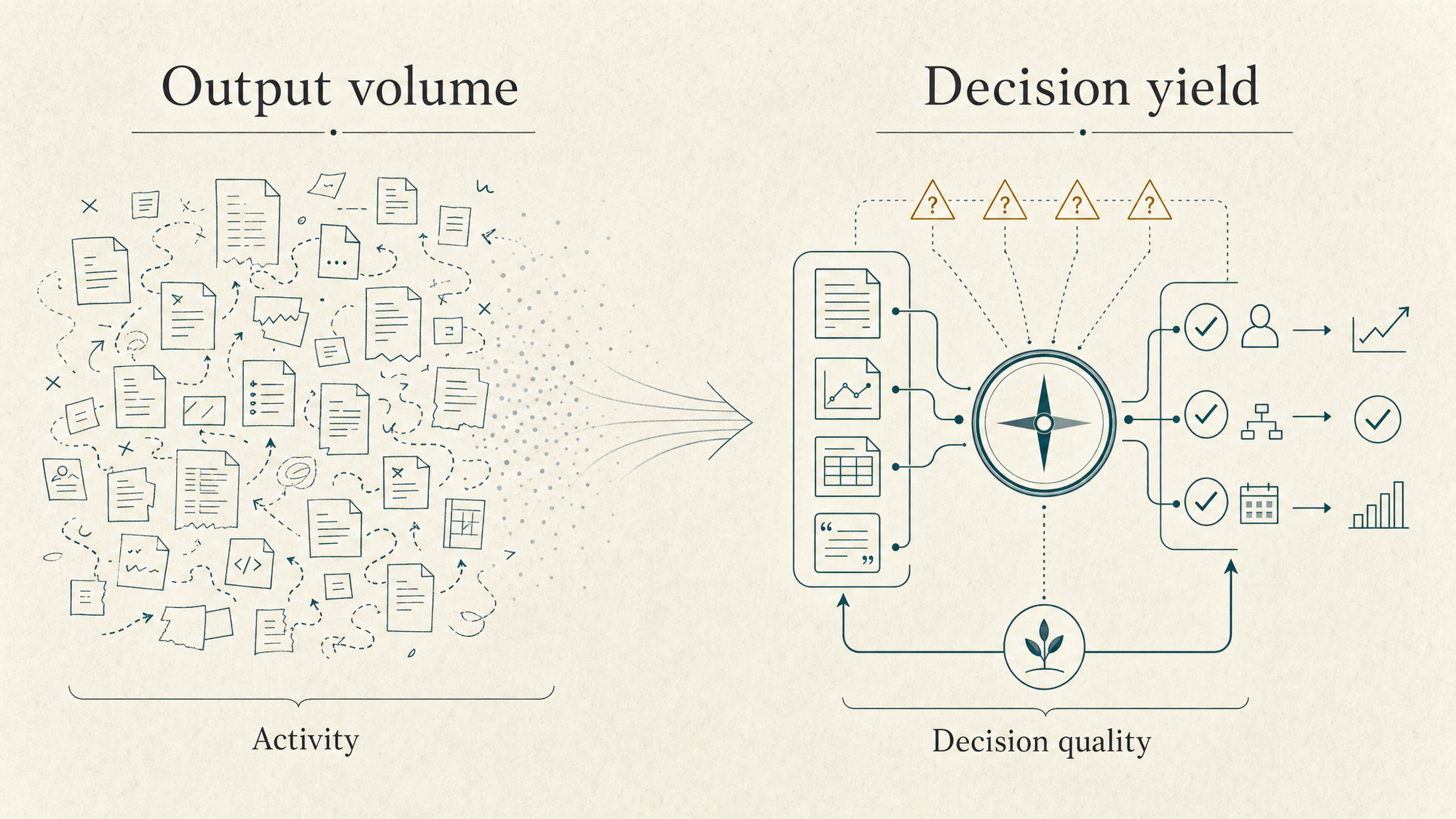
But output volume is a weak proxy for value.
In operating environments, the real question is not: how much did the system generate?
The better question is: did it improve the decision?
That is the idea I have been calling decision yield.
Output Is Not The Outcome
A lot of AI measurement starts in the wrong place.
Teams count prompts, chats, drafts, summaries, tickets deflected, documents processed, or hours theoretically saved. Those numbers are not useless. They can tell you whether a tool is being used. They can tell you whether a workflow is moving faster.
But they do not tell you whether the institution is making better decisions.
A bad summary can move quickly. A confident answer can still miss the important exception. A generated page can look complete while hiding the fact that the evidence is weak. A faster workflow can simply move uncertainty downstream.
That is why output volume is a dangerous primary metric. It rewards activity around the decision instead of improvement in the decision itself.
The value of enterprise AI shows up when the system improves the chain from information to judgment to action.
The Decision Yield Loop
Most serious operating work follows a loop:
Inputs -> Judgment -> Decision -> Action -> Outcome -> Learning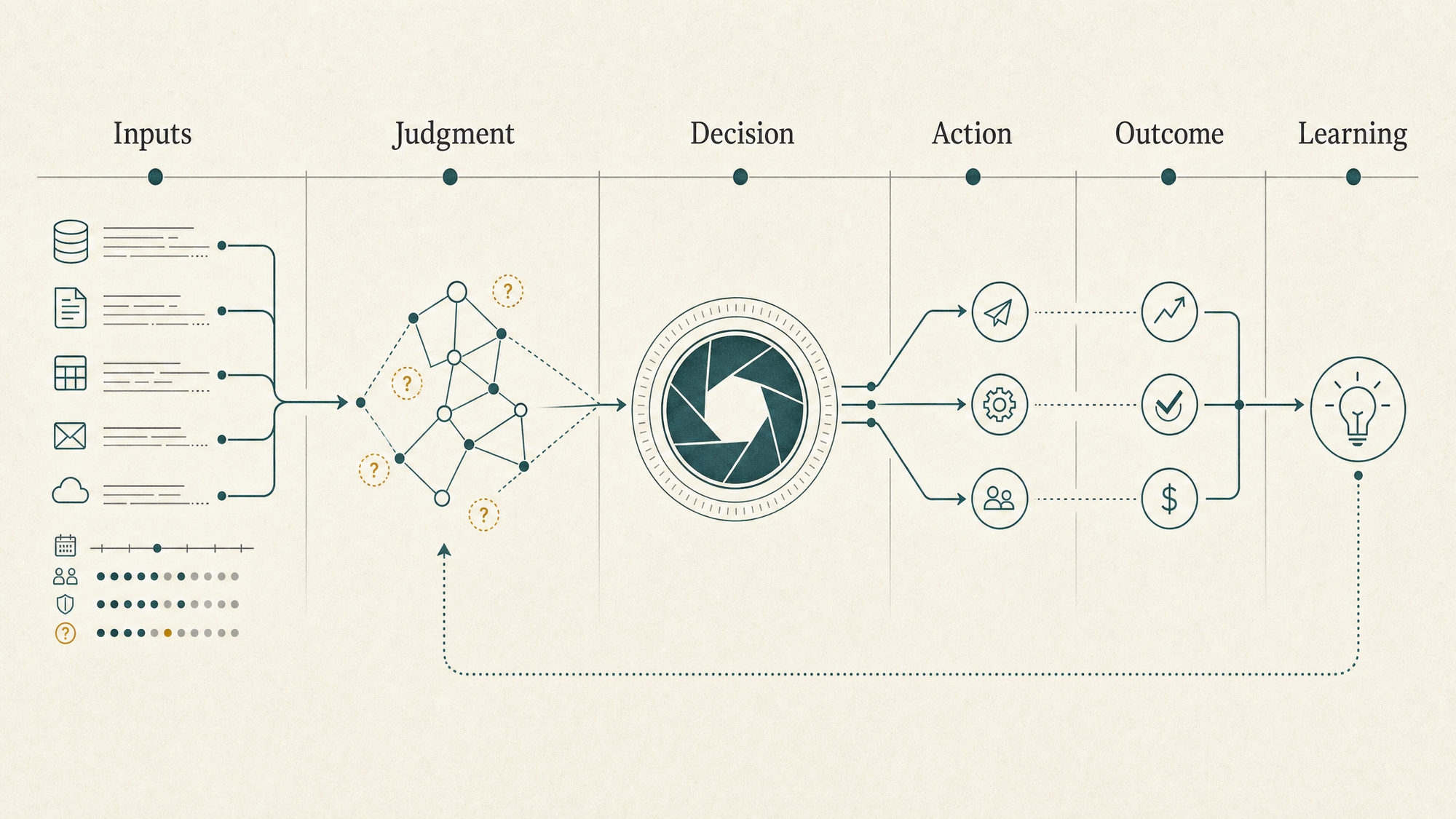
AI can help at each stage, but each stage has a different standard.
Inputs: did the system surface the right records, facts, entities, dates, exceptions, and prior decisions?
Judgment: did it make uncertainty visible? Did it separate known facts from assumptions? Did it show where human review belongs?
Decision: did it help the right person choose faster, with better context and fewer hidden gaps?
Action: did the decision turn into accountable work with owners, status, and follow-through?
Outcome: did the organization learn whether the decision worked?
Learning: did that outcome improve the next decision, or did it disappear into another thread, meeting, or document?
Decision yield is the improvement across that loop.
It is not just whether AI produced an answer. It is whether the answer changed the quality, speed, confidence, accountability, or learning rate of the decision process.
What This Changes
If you measure output volume, you build systems optimized for production.
If you measure decision yield, you build systems optimized for judgment.
That changes the architecture.
The system needs access to source records, not just text snippets. It needs to preserve evidence, not just produce prose. It needs to track confidence, gaps, owners, actions, and outcomes. It needs to remember what happened after the recommendation was made.
Otherwise, the AI system becomes a content layer sitting on top of the business. Useful, maybe. Impressive in a demo, probably. But disconnected from how the institution actually improves.
The stronger version is different.
The system should help the organization ask:
- What decision is this supporting?
- What evidence does the decision depend on?
- What is known, inferred, missing, or disputed?
- Who needs to review it?
- What action follows?
- How will we know whether the decision was good?
Those questions are less glamorous than generation quality. They are also much closer to enterprise value.
A Practical Example
Imagine a system that reviews a set of operational documents and produces a clean summary.
That is useful.
But now imagine a system that goes further. It identifies the relevant entities, dates, obligations, exceptions, and unresolved questions. It links every claim back to source material. It highlights where evidence is weak. It routes the ambiguous parts to a human reviewer. It turns approved conclusions into action items. Later, it records whether the action resolved the issue.
The first system produced content.
The second system improved the decision loop.
That difference is the entire point.
Why Decision Yield Is Harder To Measure
Decision yield is harder to measure than output volume because it requires more honesty.
It forces teams to define what decision is being improved. It requires a baseline. It asks whether the decision was faster, better supported, less ambiguous, more compliant, more consistent, or easier to audit.
It also admits that not every AI interaction should be automated end to end.
Sometimes the best system does not make the decision. It makes the decision reviewable. It shows the evidence, the gaps, and the confidence level clearly enough that a person can make a better call.
That is still value.
In many enterprise settings, that may be the highest-value role for AI: not replacing judgment, but improving the conditions under which judgment happens.
The Builder Test
Before shipping an AI workflow, I would ask:
What decision does this improve?If the answer is vague, the system is probably still a tool looking for a workflow.
Then I would ask:
How will we know?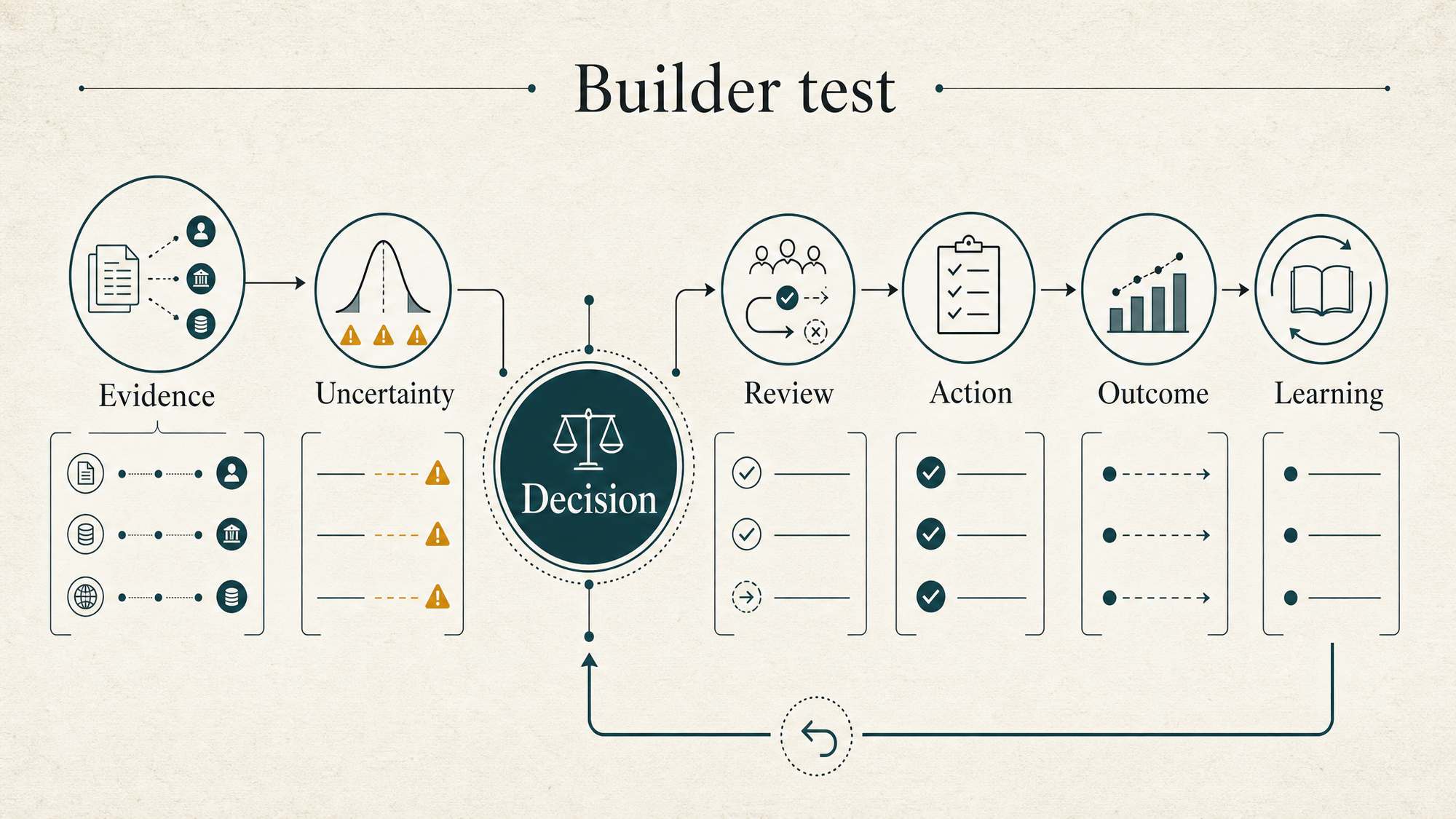
A good answer might be:
- fewer unresolved exceptions;
- faster review cycles;
- better evidence coverage;
- fewer repeated questions;
- clearer escalation paths;
- fewer decisions made without source context;
- more decisions connected to follow-through;
- more learning captured after action.
The exact metric depends on the workflow. The standard does not.
The system should make decisions more accountable.
The Point
The next wave of enterprise AI will produce plenty of content. That part is already easy.
The more important question is whether these systems help institutions decide better.
Not louder. Not faster in isolation. Not with more generated artifacts floating around the organization.
Better.
Better inputs. Better judgment. Better decisions. Better action. Better learning.
That is decision yield.
And it is a much better standard than output volume.